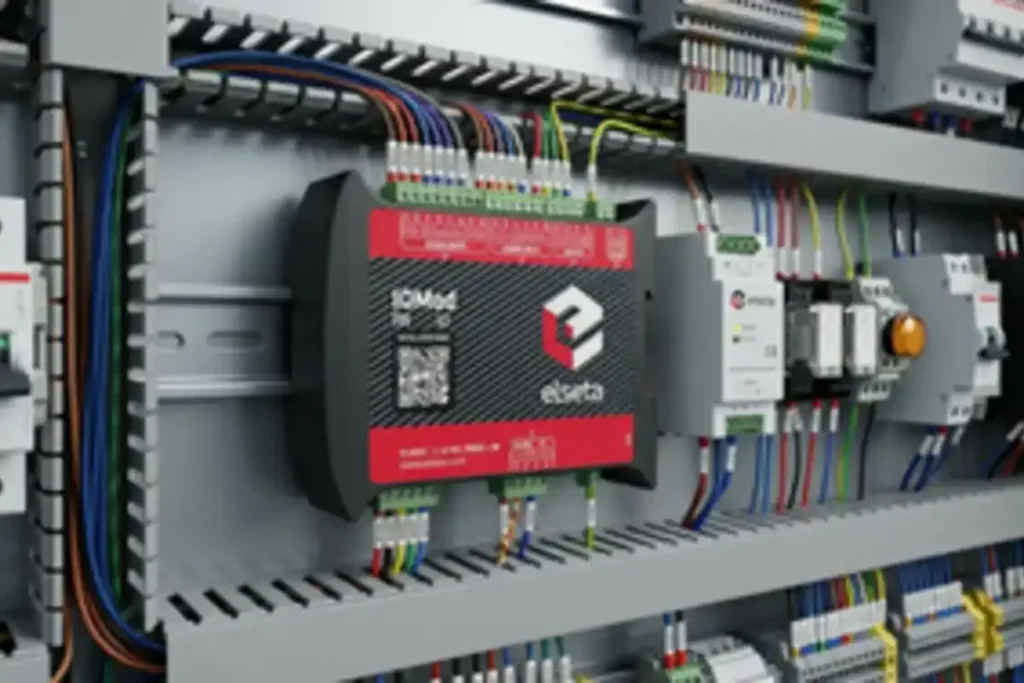

A fault passage indicator plays a critical role in modern electrical distribution networks by enabling fast and accurate fault detection. As power grids become more complex and distributed, utilities require reliable tools to identify and isolate faults quickly. Fault passage indicator provides this capability by detecting abnormal current flows and helping operators locate faults with greater precision.
In medium-voltage networks, especially those covering large geographical areas, identifying the exact location of a fault can be time-consuming without proper monitoring tools. The fault passage indicator significantly reduces this challenge by offering real-time visibility into fault events.
What Is a Fault Passage Indicator?
A fault passage indicator is a device installed on electrical distribution lines to detect the passage of fault current. It identifies disturbances such as short circuits or ground faults and signals that a fault has occurred within a specific section of the network.
These devices can be mounted on overhead lines, installed inside switchgear, or integrated into substations. Depending on the model, a fault passage indicator may provide visual signals, remote communication, or both.
Core Functions of a Fault Passage Indicator
The primary function of a fault passage indicator is to detect and indicate fault current. However, its role extends beyond simple detection.
Key functions include:
- Detection of short circuits and ground faults in real time
- Indication of fault direction to help isolate affected sections
By identifying whether the fault is upstream or downstream, the fault passage indicator allows operators to narrow down the affected area quickly.
How Fault Detection Works
A fault passage indicator continuously monitors current levels in the electrical line. When a sudden increase in current exceeds predefined thresholds, the device registers a fault event.
Advanced models can distinguish between temporary and permanent faults, which is essential for networks where automatic reclosing is used. This capability helps avoid unnecessary maintenance interventions and improves operational efficiency.
In addition, directional fault indicators analyze the flow of current to determine the location of the fault relative to the device.
Applications in Distribution Networks
The fault passage indicator is widely used in both overhead and underground distribution systems. In rural networks, where lines can extend over long distances, these devices are particularly valuable in reducing inspection time.
In urban environments, where networks are more complex, fault passage indicators help operators quickly identify affected sections without disrupting the entire system.
They are commonly deployed in:
- Medium-voltage overhead lines
- Secondary substations and switchgear systems
Their integration into automated systems further enhances their functionality.
Integration with Automation Systems
Modern power grids rely heavily on automation. The fault passage indicator can be integrated with remote terminal units (RTUs) and SCADA systems to provide real-time data to control centers.
This integration enables automated fault detection and faster decision-making. When combined with switching devices, it allows for remote isolation of faulty sections and rapid restoration of service.
Elseta develops modular solutions that integrate fault indicators with automation platforms, enabling centralized monitoring and secure communication across distributed energy networks.
Benefits for Utilities
The implementation of a fault passage indicator offers several operational benefits:
- Faster fault location and reduced outage duration
- Improved reliability and quality of service
By minimizing the time required to locate and isolate faults, utilities can significantly enhance customer satisfaction and operational performance.
Reliability and Environmental Performance
Fault passage indicators are designed to operate in harsh environmental conditions. They must withstand temperature variations, humidity, and exposure to outdoor elements while maintaining accurate performance.
Reliable operation is essential, as incorrect fault detection can lead to delays in restoration or unnecessary interventions.
Why Fault Passage Indicators Are Essential for Modern Grids
In conclusion, the fault passage indicator is a key component in modern electrical networks. Its ability to detect faults quickly, provide directional information, and integrate with automation systems makes it indispensable for utilities.
As grids continue to evolve toward greater automation and digitalization, the fault passage indicator will remain a fundamental tool for improving reliability, reducing downtime, and ensuring efficient network management.