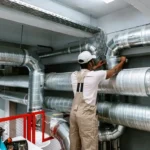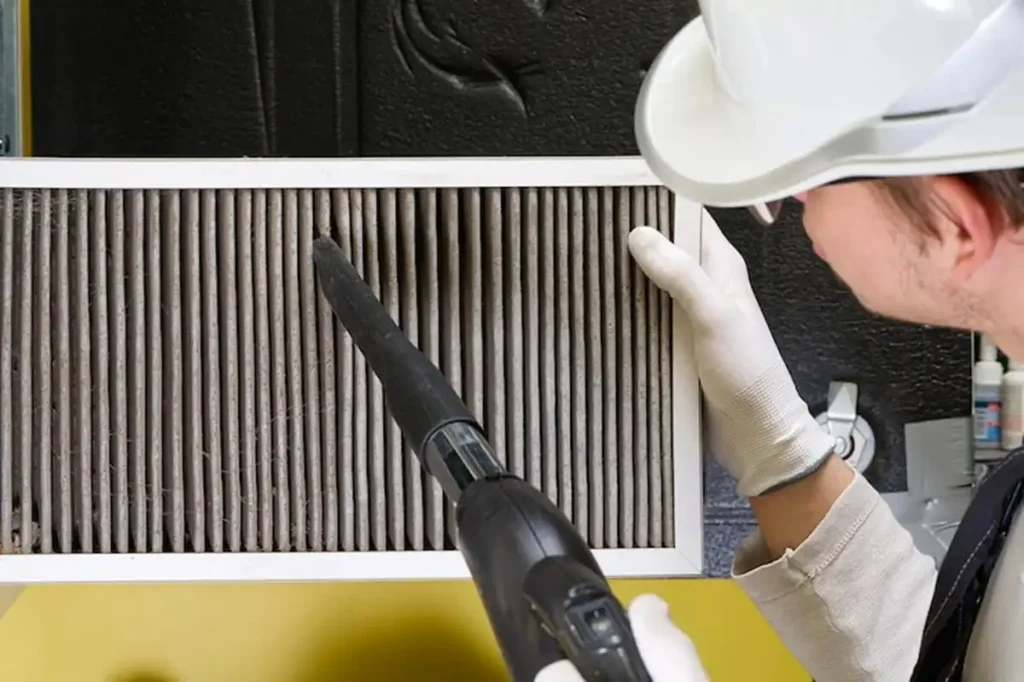

Heating and cooling systems do not always fail in obvious ways. Sometimes the equipment appears to suffer from a major mechanical problem when the real issue is far less dramatic. Airflow restrictions can create symptoms that resemble compressor failure, blower motor trouble, frozen coils, overheating furnaces, or thermostat defects. Because airflow touches every stage of system performance, even a partial blockage can distort temperatures, pressure relationships, cycle length, and overall comfort. That is why restricted airflow often leads homeowners to assume the system is completely failing. In many cases, the equipment resists rather than collapses on its own.
What Restriction Can Resemble
- Weak Air Delivery Can Imitate Equipment Failure
One of the most misleading effects of airflow restriction is how convincingly it appears to be a failing major component. When filters clog, return ducts are undersized, supply vents are blocked, or blower compartments gather debris, the amount of conditioned air reaching the rooms begins to fall. To the homeowner, the delivery property may feel like the system has lost its ability to heat or cool altogether. Air still comes out, but it may seem too weak, too uneven, or too inconsistent to trust. This often leads people to suspect the blower motor is failing, the outdoor unit is no longer producing capacity, or the thermostat has stopped controlling the system properly. In reality, the equipment may still be producing conditioned air but struggling to move it through the house. The problem is especially confusing because the symptoms do not stay isolated to one room. A restricted system can make one area stuffy, another drafty, and a third almost unchanged. That uneven response gives the impression of broad system instability even when the root issue is resistance in the air path rather than a catastrophic equipment malfunction.
- Temperature Swings Often Point the Blame Elsewhere
Airflow restrictions also distort temperature behavior in ways that can mimic more serious internal trouble. In an air conditioning system, low airflow across the evaporator coil causes the coil to become too cold, eventually leading to frost or ice. When that happens, the unit may stop cooling properly, really, and the homeowner may assume the refrigerant charge is wrong, or the compressor is failing. In a furnace, restricted airflow can make the heat exchanger area run hotter than intended, triggering limit switches that shut the burner down early. To someone watching the system cycle on and off, that pattern may look like ignition trouble, sensor failure, or a damaged control board. These reactions are real, but they are often protective responses to poor airflow rather than proof that a major part has failed. In homes across Huntsville, TX, changing filter conditions, dusty return pathways, and closed interior doors can quietly create performance patterns that seem much more severe than the underlying cause. Once airflow drops, the system’s temperature balance changes throughout, and those shifts can lead technicians and homeowners to the wrong diagnosis if air movement is not evaluated first.
- Pressure Imbalance Can Resemble Duct or Motor Problems
Restricted airflow does not just affect temperature. It changes pressure relationships throughout the system, and that can make routine operation sound or feel like something much worse. A strained blower may become louder as it works against resistance, creating humming, whistling, or rushing sounds that homeowners often associate with motor damage or loose ductwork. Return-side restrictions cause doors to slam shut or feel harder to open when the system runs, which may be mistaken for structural settling rather than air-pressure imbalance. Supply restrictions can increase velocity noise at certain vents while leaving others unserved, giving the impression that duct branches have disconnected or that the blower wheel is damaged. Even the outdoor unit can appear suspicious when poor indoor airflow prevents normal heat trans, leading to longer cycle times. The homeowner hears more noise, gets less comfort, and sees the system running longer, so it is natural to think a major piece of equipment is wearing out. Yet pressure imbalance caused by restricted airflow can produce all of those warning signs without any single primary component actually being broken. That is why airflow testing often reveals a simpler explanation beneath symptoms that seem far more serious at first glance.
Early Airflow Checks Prevent Bigger Misdiagnoses
Airflow restrictions are deceptive because they produce symptoms that overlap with those of the major heating and cooling failures. Weak output, short cycling, icing, overheating, strange noises, and uneven room conditions can all look like signs of expensive component damage when the system is actually reacting to blocked or restricted airflow. That does not make the issue minor, since restricted airflow still strains equipment and reduces comfort, but it does mean the first diagnosis should not jump straight to replacement-level conclusions. Looking at filters, duct paths, blower cleanliness, vent obstructions, and return design often explains what seems confusing. A system can appear deeply malfunctioning when it is actually struggling to breathe through resistance.