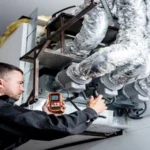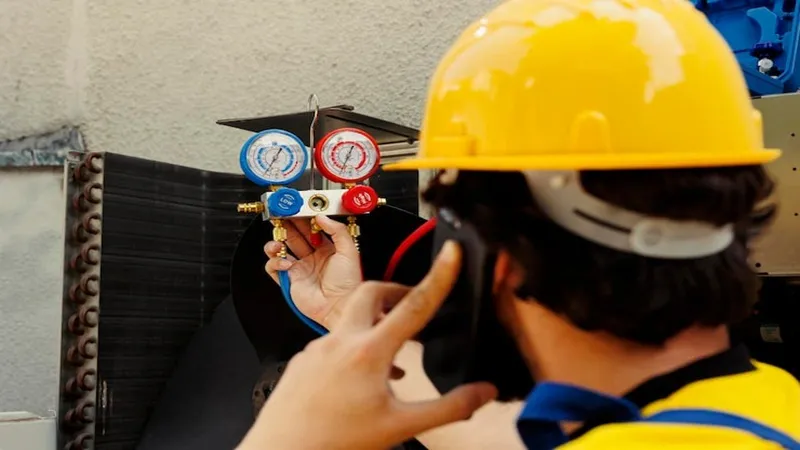

An HVAC system can look complete on installation day and still perform below expectations if conditioned air leaks through unsealed joints, poorly fitted connections, or damaged duct sections. Commissioning is the stage where appearance gives way to proof. Instead of assuming air is reaching each room as intended, contractors verify whether the duct system can actually hold pressure and deliver airflow without wasting capacity into attics, crawlspaces, wall cavities, or mechanical chases. Leakage testing matters because even a well-sized unit can struggle when the duct network quietly loses part of its output before it reaches occupied space. Commissioning turns those hidden losses into measurable facts.
Measuring Leakage
- Pressurization Tests Reveal System Integrity
One of the most common ways to evaluate duct leakage during commissioning is to pressurize the duct system with a calibrated fan and measure the amount of air that escapes. In contrast, the system is held at a target pressure. This method gives technicians a controlled way to compare the installed duct network against an acceptable leakage threshold, rather than relying on visual inspection alone. Registers and grilles are temporarily sealed, the test fan is attached to the duct system, and the airflow required to maintain the chosen pressure is recorded. If the fan must move more air than expected just to hold that pressure, the system is leaking more than it should. This approach is valuable because it turns a hidden performance problem into a number that can be evaluated, documented, and corrected before handoff. During commissioning, that matters more than general impressions of workmanship. A duct system may look sealed from the outside but still leak at boots, takeoffs, air handler connections, or branch seams. In regions such as Augusta, GA, where cooling performance and humidity control depend heavily on delivered airflow, this type of test helps reveal whether the system is prepared to perform under real seasonal demand rather than only during installation startup.
- Leakage to Outside Tells a Different Story
Not all leakage measurements answer the same question, which is why commissioning often distinguishes between total duct leakage and leakage to the outside. Total leakage measures how much air escapes from the duct system overall, regardless of whether that air leaks into conditioned or unconditioned space. Leakage to the outside focuses more narrowly on losses that leave the thermal envelope, which are often the most damaging from energy and comfort standpoints. This method becomes especially important when ducts pass through attics, garages, vented crawlspaces, or wall cavities that are outside the conditioned area. A system may show moderate total leakage, but a much more concerning leakage-to-outside result occurs when major losses are occurring, which directly undermines efficiency. Testing for this condition often involves combining duct pressurization with building-pressure diagnostics to identify where the lost air is going. That added layer helps contractors determine whether leakage is simply a workmanship issue within the conditioned space or a larger performance problem affecting energy use and room delivery. During commissioning, this distinction matters because the corrective priorities may change depending on where the losses occur. Air leaking into a dropped ceiling inside the envelope is not the same as cold or warm air entering an attic, where it no longer supports comfort.
- Pressure Diagnostics and Smoke Tracing Locate Defects
Numerical leakage results are useful, but commissioning also requires methods to locate the actual defects that cause those numbers. That is where pressure diagnostics, smoke tracing, and targeted inspection become important. Pressure pan testing can help identify pressure differences at individual registers while the house is depressurized, offering clues about where leakage may be concentrated within different duct runs. Smoke tools, theatrical fog, or other visible air-tracing methods may then be used near suspected joints, plenums, boots, and cabinet seams to show where air is escaping. These techniques are especially helpful after a duct blaster test identifies excessive leakage but before repairs are made, because the crew still needs to know which sections deserve immediate attention. Visual confirmation also helps distinguish meaningful leakage points from minor imperfections that appear messy but do not cause significant losses. During commissioning, that practical side matters because testing is not performed just to generate a report. It is performed to improve the installed system before it becomes the owner’s long-term problem. By combining measured leakage numbers with field methods that reveal where the air is actually escaping, contractors can move from diagnosis to correction more systematically and avoid leaving the system only partially verified.
Verified Duct Performance Supports Better Startup
Duct leakage testing during HVAC commissioning is valuable because it confirms whether the air distribution system can support the equipment it serves. Pressurization testing, leakage-to-outside evaluation, and field methods such as smoke tracing or pressure diagnostics each contribute a different piece of that picture. Together, they show not only whether leakage exists, but how much it matters and where it should be corrected. A commissioned system should do more than turn on. It should deliver air in a way that matches the design intent. Leakage testing helps make that standard measurable, so comfort, efficiency, and airflow performance begin with evidence rather than assumption.